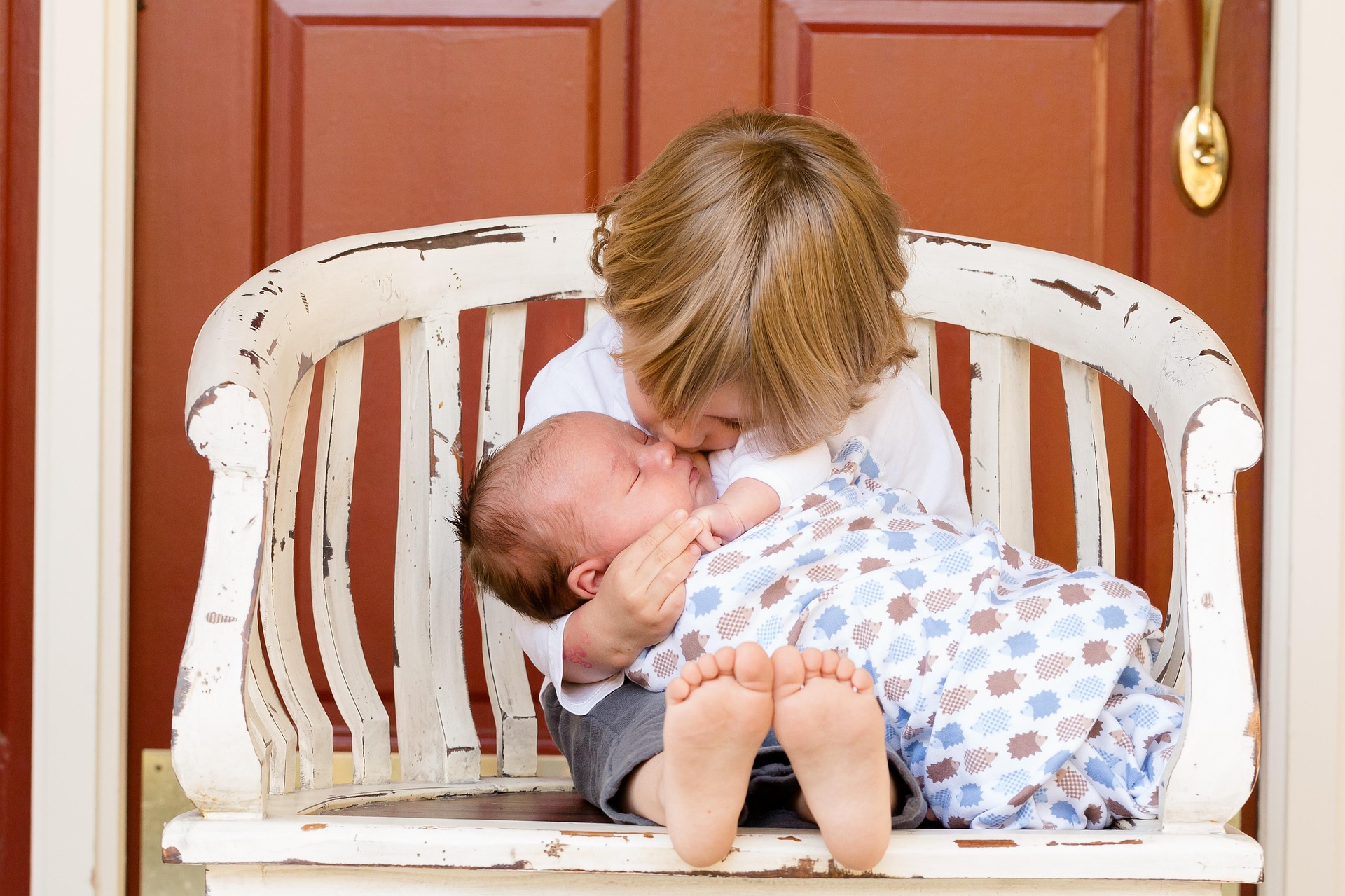
One of the quiet myths in family life is that children experience the same household in the same way. Same parents. Same home. Same values. Therefore, the same childhood.
In reality, siblings grow up in completely different emotional worlds.
They arrive at different moments. Into different versions of their parents. Into systems that have already been shaped by exhaustion, confidence, stress, learning, loss, or ease. By the time a second or third child arrives, the family is no longer the same organism it was at the beginning.
This is often felt, long before it’s understood.
Parents may notice that one child seems more settled, another more reactive. One more independent, another more emotionally demanding. It’s tempting to explain this as personality alone. Sometimes it is. But often, it’s also about position.
Who arrived when.
What the system needed at that time.
What was already in motion.
First children often meet intensity and focus. They are shaped by closeness, attention, and expectation. Later children often meet efficiency, division of attention, and a system already in rhythm. Neither experience is better or worse. They are simply different.
What can become difficult is when difference is mistaken for inequality.
Parents can feel guilt about this, especially when they begin to notice it. They may worry that one child has been short-changed, or another overburdened. They may try to compensate by forcing balance, treating everyone the same, or evening things out wherever possible.
But siblings don’t need sameness. They need attunement.
Attunement allows for difference without comparison. It recognises that each child is responding not just to their own temperament, but to the emotional environment they entered. It understands that behaviour often reflects position within the family, not just individual will.
Sibling tension often emerges when these differences go unnamed.
A child who acts out may be responding to feeling unseen. A child who withdraws may be protecting their place. Rivalry can be less about jealousy and more about uncertainty. Who am I here now that someone else is here too?
These questions are rarely conscious, but they are deeply relational.
Parents are often placed in the uncomfortable position of being both witness and participant in this dynamic. They may feel pulled, triangulated, or emotionally stretched. It can feel impossible to respond well to everyone at once.
This is where perspective helps.
When sibling dynamics are viewed through a relational lens, they become less about fairness and more about balance. Less about correcting behaviour and more about understanding what each child is trying to protect or express.
Astrology, when used thoughtfully, can offer language for this without locking children into roles. It can help parents notice where one child needs reassurance, where another needs space, and where tension is likely to surface simply because of difference in rhythm or sensitivity.
Not to label siblings, but to hold them as distinct presences within a shared system.
Over time, sibling relationships change. Early rivalry may soften into alliance. Distance may turn into mutual respect. What matters most is not eliminating tension, but creating enough emotional safety that difference doesn’t threaten belonging.
Children don’t need to feel equal in experience. They need to feel secure in their place.
When that security is present, sibling relationships have room to grow into something far more complex and resilient than harmony alone.